
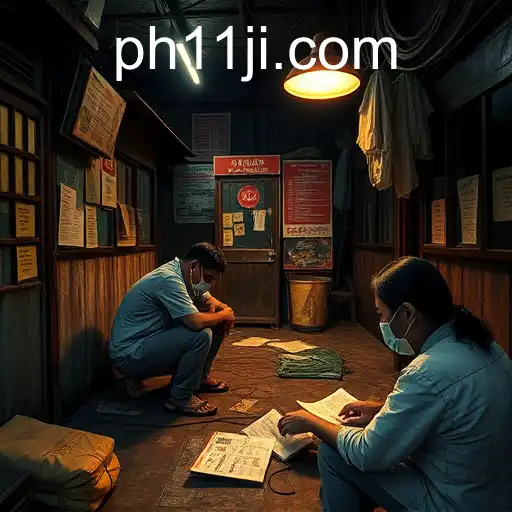
PH11 | Jueteng: Culture, Community, and Controversy in the Philippines
PH11’s Explore Jueteng, its cultural roots, economy, politics, and implications in the Philippines, a traditionally embedded gambling spectacle often faced with legal challenges and social considerations.
The Cultural and Economic Impact of Jueteng in the Philippines: An In-Depth Look
Understanding Jueteng: An Overview
Jueteng, a popular numbers game of chance similar to illegal lotteries, has long been an entrenched part of the social, political, and economic landscape of the Philippines. Played primarily in the Luzon region, it is often described as a grassroots gambling activity deeply embedded in Philippine culture and society. Despite numerous campaigns to eradicate it, Jueteng remains persistent due to its complex nature and widespread acceptance among many communities.
The Mechanics of Jueteng
At the core, Jueteng involves betting on a set of numbers ranging from 1 to 37. Participants choose two numbers, and the winning pair is drawn from a set of numbered balls, similar to a lottery draw. Despite being illegal, the game operates openly in many places, often under the radar of local law enforcement or with their tacit approval. This widespread tolerance is particularly evident in rural areas where Jueteng has become a source of entertainment and potential daily income for many people. The earnings promise, however small, makes it appealing to those seeking financial relief.
Jueteng's Immense Popularity
The popularity of Jueteng springs from its accessibility and the hope it provides to the impoverished. Unlike other forms of legal gambling, Jueteng requires minimal upfront costs, thereby attracting a broad base of participants who may be economically disadvantaged. Its grassroots nature means that it is perceived as a form of gambling that aligns closely with local customs and social structures.
The Social Dimensions of Jueteng
In many parts of the Philippines, particularly where poverty is pervasive, Jueteng serves as more than just a gambling activity. It is often woven into the fabric of community life, serving as a social equalizer. Regular bettors establish a form of community camaraderie, sharing hopes for winning numbers and strategies. Despite the inherent illegal status of the game, its integration into daily life fosters a shared social experience, transcending mere entertainment.
The Economic Impact of Jueteng
Jueteng generates substantial financial movement, operating through an informal economy that impacts local and national levels. While the gains from Jueteng can be described as small-scale when viewed individually, collectively they amount to what could be described as a significant underground economy. It is estimated that billions of pesos circulate through Jueteng operations annually, although the exact figures are difficult to ascertain due to the informal nature of the economy. Economic Dependency and Strain
This informal economy has led to dependency for some, where local economies partially revolve around the daily operations of Jueteng. Small businesses, vendors, and local taverns find their customer base increases around Jueteng operations, contributing to a symbiotic economic relationship. However, the focus on gambling can put significant economic strain on households, particularly those with limited financial resources, leading to cycles of poverty.
Political Implications of Jueteng
Politicians often find themselves in a complex dance with Jueteng. On one hand, campaign promises often include the eradication of illegal gambling; on the other, many find Jueteng operators instrumental in securing votes, especially in regions where the game is prevalent. The ties between political entities and Jueteng operators can be symbiotic, as local officials allegedly benefit from protection money paid by operators to continue operations unhindered.
Those who try to implement strict anti-Jueteng policies face significant challenges due to the entrenched nature of the game in communities. Resistance can come not only from operators but also from the public, who may view these policies as an attack on a long-standing aspect of community life.
The Legal and Ethical Dimensions
While the legality of Jueteng is clear—being categorized firmly as illegal gambling—the ethical considerations are more nuanced. Advocates for the complete eradication of Jueteng argue that it perpetuates poverty, fosters corruption, and diverts funds that could be used on essential needs. However, some propose legalizing and regulating the game as a more effective approach, offering a middle ground that acknowledges Jueteng’s cultural significance.
Legalization could potentially allow for better regulation of the game, funneling what is currently an underground economy into a legitimate revenue stream for the government. This approach would enable the government to divert funds to improvement projects like infrastructure, education, and health services, particularly in impoverished regions.
Jueteng in the Modern Era
With the onset of technology, the face of Jueteng is evolving, embracing digital platforms for betting and number selection. This move towards digitization presents both challenges and opportunities: challenges in terms of heightened law enforcement difficulties, and opportunities in possible regulation and taxation should the game ever be legalized. As technology continues to shape various facets of life, it is likely that Jueteng will adapt in ways that further engrain its presence across varied demographics.
Conclusion: Navigating a Complicated Issue
Jueteng presents a conundrum that intersects culture, economy, and politics in the Philippines. Its deep-seated role in Filipino life makes outright eradication complex and contentious. As such, addressing Jueteng requires a nuanced approach that considers the socio-economic realities of its participants, the potential for economic benefit from regulation, and the overarching legal framework. A balance must be struck between acknowledging the role Jueteng plays in society and addressing its underlying issues, such as poverty and corruption, that perpetuate its existence. For the Philippines, the future of Jueteng will likely continue to be a polarizing topic, demanding innovative solutions that respect cultural contexts while striving for social betterment.
